

First-Time Guide to Central Park Bangkok: Architecture, Sky Garden & Things to See
Central Park Bangkok is easy to mistake for another major Bangkok shopping mall. For a first-time visitor, that misses the point.
The destination was conceived as a place where Bangkok’s urban life and green space meet. It sits opposite Lumphini Park, connects directly into the city’s BTS, MRT and Skywalk network, and rises towards a 7-rai Roof Park that extends the idea of the park into the development itself.
With more than 550 Thai and international brands and experiences, extensive dining and a strong day-to-night programme, there is plenty to do. But the most distinctive first-time experience is not simply what you can buy. It is how the architecture, interior spaces, skyline views and elevated landscape work together.
Why Central Park Is Different
Central Park was designed as an urban destination rather than a self-contained mall.
Its location matters. On one side is Lumphini Park, one of Bangkok’s largest and most recognisable green spaces. Around it are Silom and Sathorn, two of the city’s most established business districts, with easy access to other central Bangkok neighbourhoods.
The development uses that setting as part of its identity. Instead of separating retail from the city outside, Central Park is designed around movement between street, shopping, work, hospitality and green space. The wider development brings together the shopping centre, offices, hotel and residences, with the Roof Park acting as a green connector across the project.
Central Park describes the design vision around four recurring ideas: nature, connectivity, culture, and sustainability and design. The shopping mall spans more than 130,000 sq.m. of gross building area and brings together more than 550 brands and experiences.
For a visitor, the result is a destination that can move naturally from a morning walk in Lumphini Park to coffee, shopping, architecture, the Roof Park, dinner and the surrounding Silom nightlife without the day feeling fragmented.
Architecture Worth Looking Up For
The architecture is part of the visit, not simply the container for it.
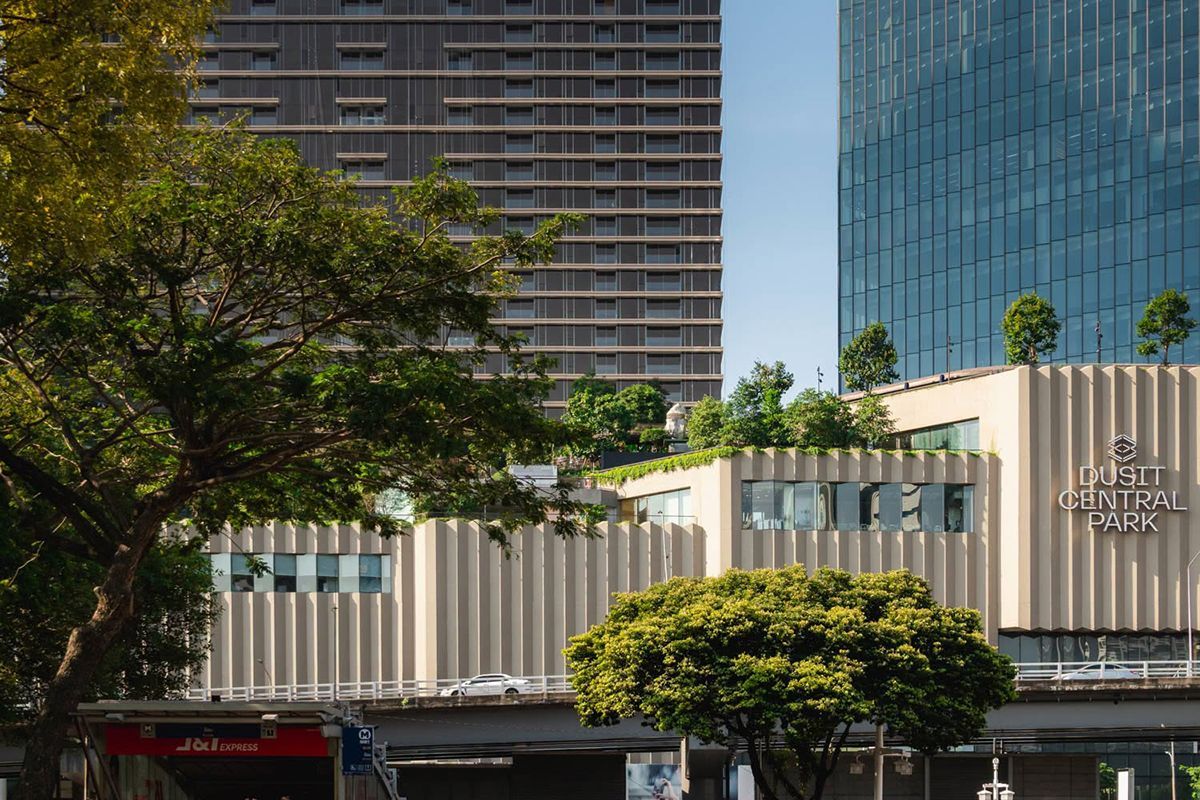
Central Park Bangkok is the retail centrepiece of the wider Dusit Central Park development, positioned at the Sala Daeng intersection where Silom meets Rama IV Road, directly opposite Lumphini Park. The complex combines fashion, dining and lifestyle uses within a highly contemporary architectural setting.
The design approach balances two ideas that could easily compete with each other: the energy of a major city development and the calmer identity of the green space beside it.
Inside, strong sightlines, large open volumes and repeated geometric forms draw the eye upwards and across the building. Heritage cues from the former Dusit Thani hotel site are reinterpreted rather than reproduced literally, while materials and forms create continuity between the site’s earlier identity and a more contemporary Bangkok.
That makes Central Park worth exploring vertically. Instead of moving directly from store to store, first-time visitors should look across the atriums, notice how one level frames the next, and follow the gradual change from dense urban interiors towards the greener upper levels.
Key architectural highlights include:
• Biophilic multi-level design: the 130,000-square-metre lifestyle complex uses planting and natural textures across different levels to blur the boundary between nature and urban space.
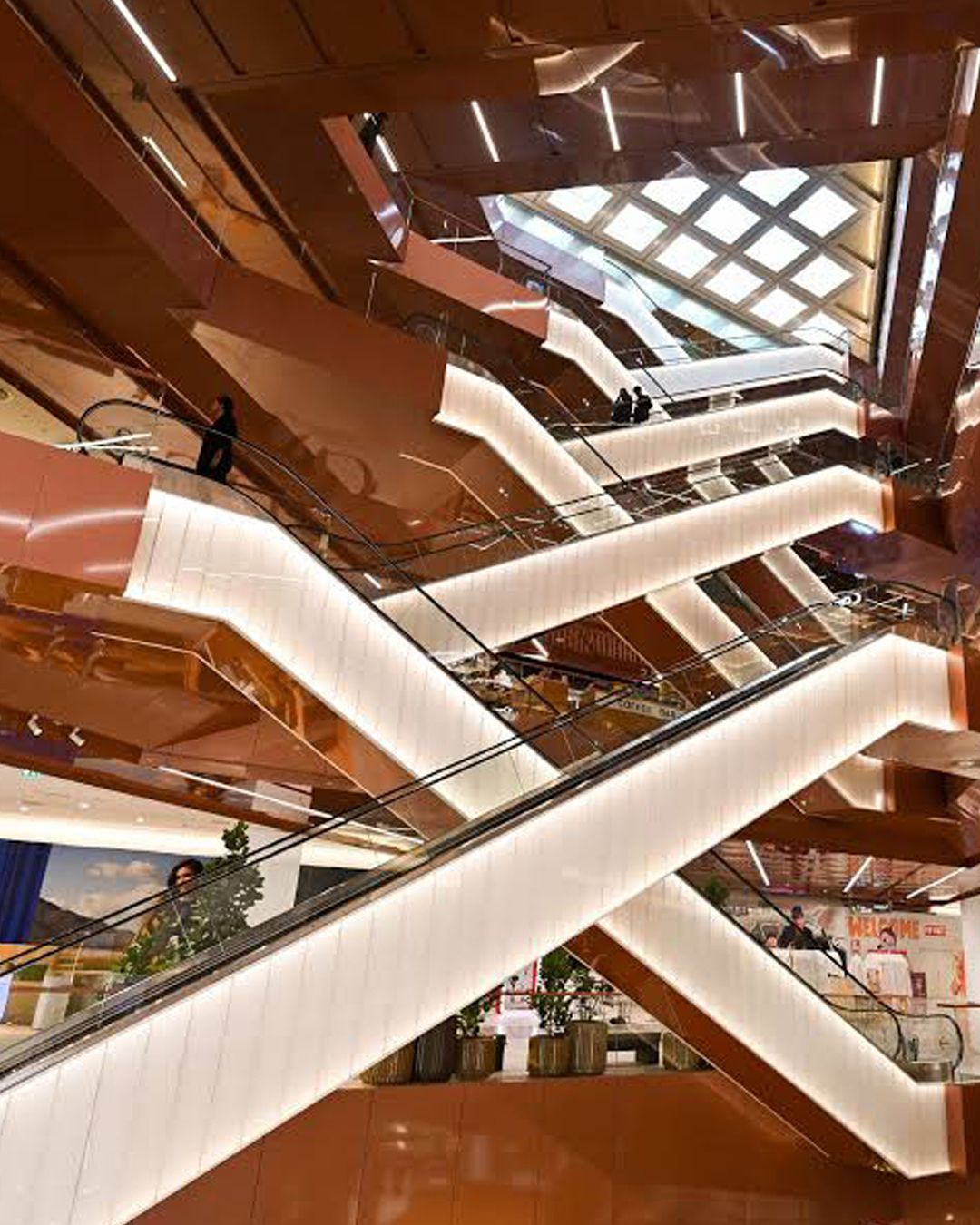
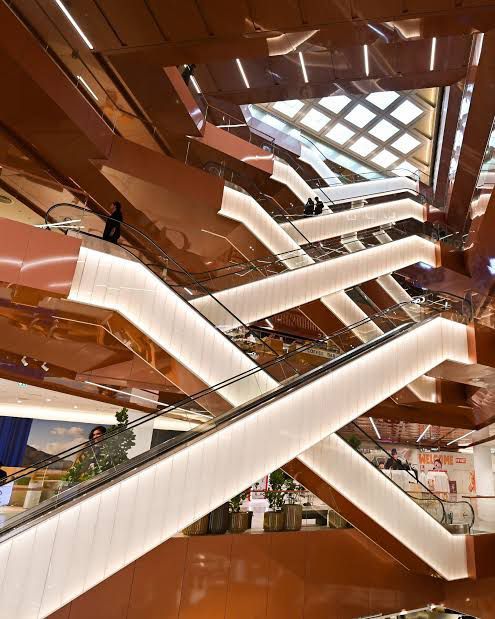
• The Silver, Copper and Bronze Voids: three monumental multi-level atriums create distinct spatial experiences, including the dramatic intersecting escalators in the Copper Void.
• Heritage-inspired geometry and tower massing: stacked and tiered forms subtly reference traditional Thai architectural layering while maintaining long views across the development.
• A 518-square-metre curved LED screen at street level, used for large-scale digital displays and installations.
Find Central Park’s Signature Photo Spots
Central Park has quickly developed a visual identity of its own, and several parts of the building are worth seeking out even if photography is not the main purpose of your visit.
The Criss-Cross Escalators
The eight illuminated, criss-crossing escalators crossing the main atrium have become one of Central Park Bangkok’s most recognisable features. Their overlapping geometry gives the space a kinetic quality and has made the atrium a popular architecture and social-media photo spot.
For stronger photographs, step back far enough to capture several levels at once and use the crossing lines to create symmetry or tension within the frame.
The Roof Park (Dusit Arun)
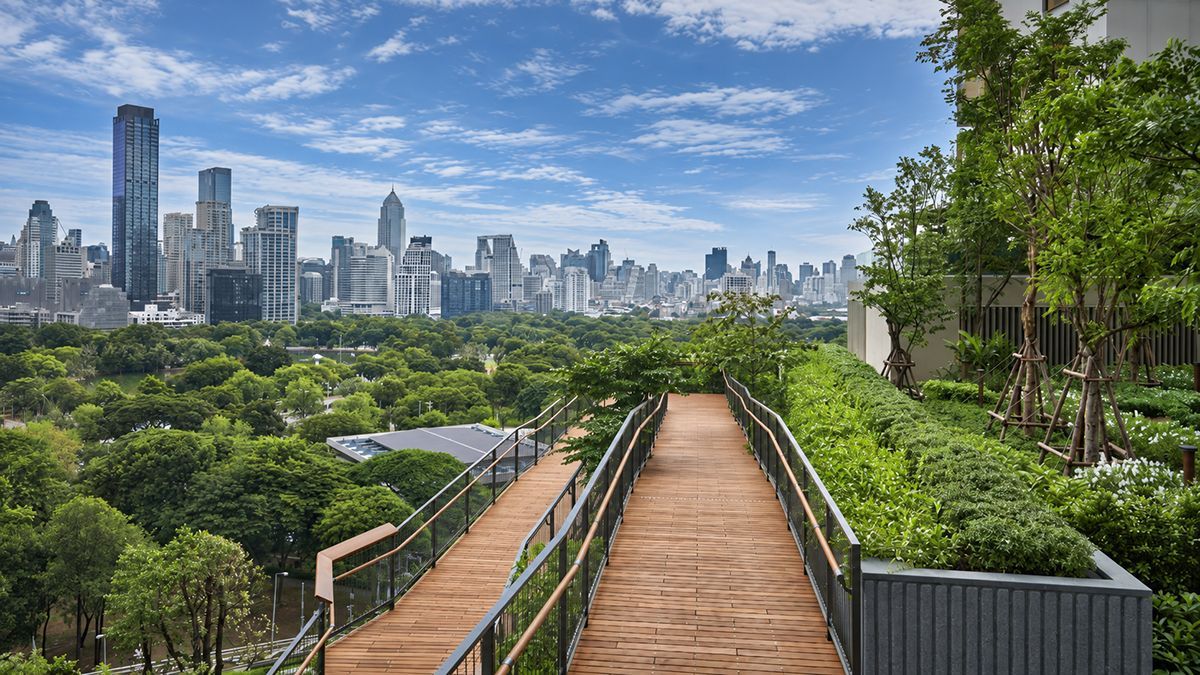
The Roof Park offers the opposite visual language: greenery, open sky and the Bangkok skyline. Spanning 7 rai, or around 11,200 sq.m., across the 4th to 6th Floors, it is designed as a visual extension of Lumphini Park and includes native Thai planting, walking paths, waterfalls and panoramic viewpoints.
Look for compositions that include both landscape and architecture rather than isolating one from the other.
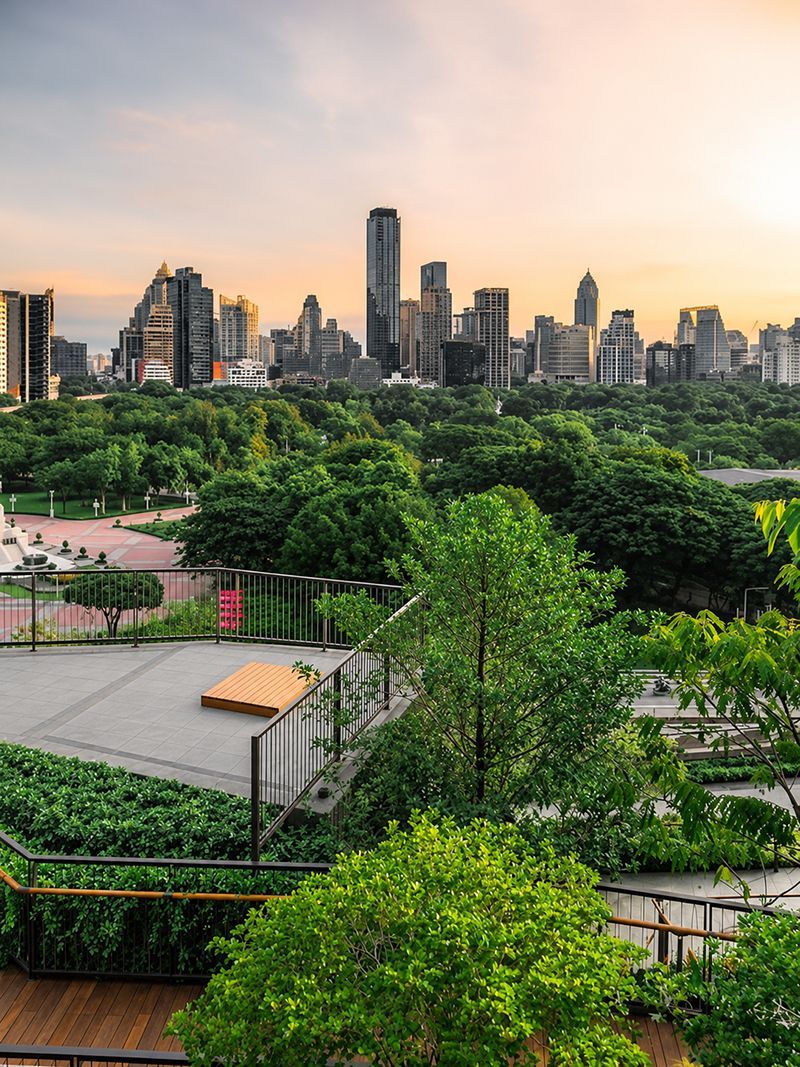
The Lumphini View
From the elevated green space, Lumphini Park sits in the foreground with Bangkok’s towers beyond it. The contrast explains the development’s location in a single image: park, city and skyline layered together.
Daylight gives the clearest view of the green expanse. Towards sunset, the skyline becomes more dramatic. After dark, city lights change the scene again.
Bangkok’s Green-to-Sky Experience
The Roof Park deserves more than a quick stop for a skyline photograph.
Spanning 7 rai - approximately 11,200 sq.m. - and cascading across the upper levels from the 4th to the 6th Floors, the Roof Park was created as a continuation of Central Park’s wider idea of bringing city life and nature together. Landscape Collaboration designed the elevated landscape as green infrastructure for the project, not simply as decorative planting above a shopping mall.
Its position opposite Lumphini Park is what makes it distinctive. At ground level, Lumphini is a major green lung within Bangkok. As visitors rise through Central Park, that green relationship continues rather than disappearing: the architecture gradually opens towards planted spaces, walking routes and elevated views.
The Roof Park includes a 750-metre Natural Walk Trail, landscaped areas, an amphitheatre, spaces for children and pets, and panoramic viewpoints. Its cascading form from the upper retail levels helps create a gradual transition from built space to open landscape.
The experience changes through the day. In daylight, Lumphini’s greenery dominates the foreground. Around sunset, the skyline becomes more pronounced. By night, the park below darkens while the surrounding city lights take over the view.
That sequence - Lumphini Park, elevated landscape, Bangkok skyline - is the real Green-to-Sky experience. It is less about escaping the city than seeing how nature has been deliberately woven back into it. The Roof Park is open daily from 6:00 AM to 10:00 PM.
What Visitors Can Do at the Roof Park
• Find the best skyline views: Bird Nest Viewpoint and Sawasdee Bangkok Viewpoint look across the green canopy of Lumphini Park towards Bangkok’s central-business-district skyline.
• Photograph the heritage waterfalls: Cascade 2513 is a multi-level waterfall feature inspired by the historic indoor waterfall of the original Dusit Thani hotel.
• Catch sunsets and cultural events: the Dusitpini Amphitheatre is an open-air tiered space used for sunset viewing and selected cultural programming, including acoustic performances and outdoor screenings.
• Walk or jog the accessible nature trail: the winding route is designed with universal-access principles and can be used by strollers, wheelchair users and morning joggers.
Experience Central Park from Day to Night
For a first-time visitor, Central Park makes the most sense when experienced as part of the surrounding city rather than as a single indoor stop.
Morning: Lumphini Park -> Coffee -> Roof Park
Begin with a walk in Lumphini Park while the temperature is more comfortable. Cross into Central Park for coffee from around 8:00 AM, then continue upwards to see the Roof Park in clear morning light.
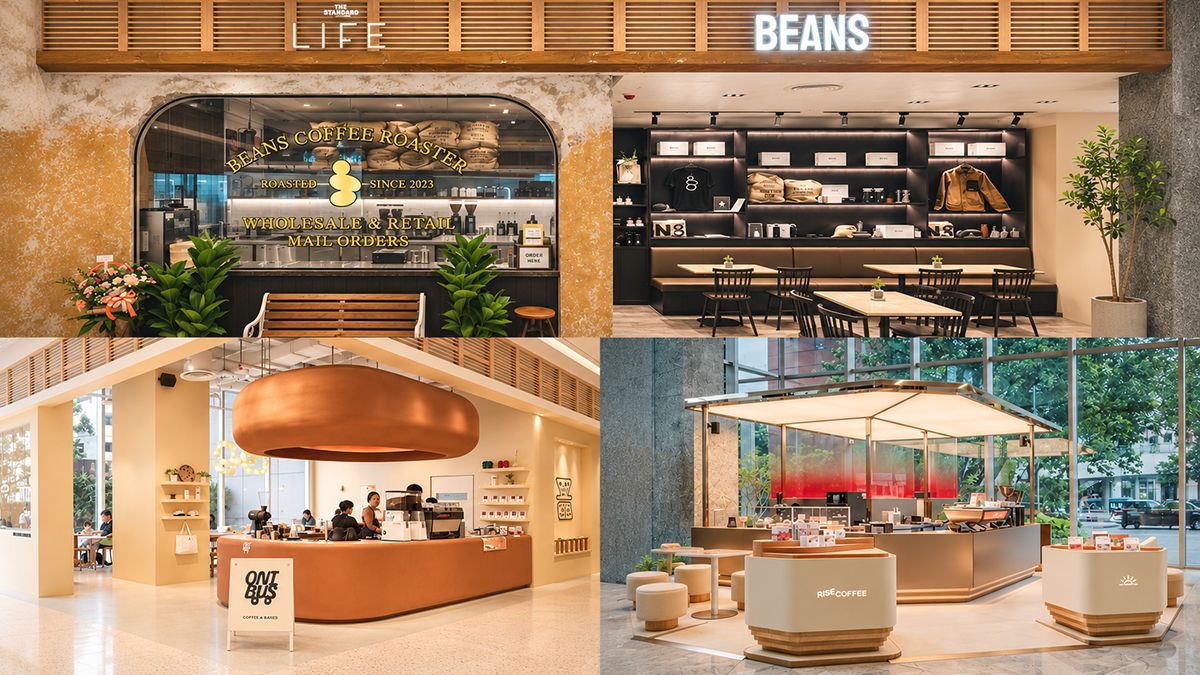
• ONIBUS COFFEE - G Floor: Japanese specialty coffee, hand-drip coffee, beans, food and desserts.
• BEANS COFFEE ROASTER - G Floor: specialty coffee, a selection of beans and a relaxed coffee break.
• RISE COFFEE - G Floor: coffee, selected beans and freshly baked pastries for an easy grab-and-go stop.
Midday: Shopping -> Thai Souvenirs -> Café
Use the middle of the day for indoor browsing. Explore the retail mix, look for a Thai-made gift or souvenir, and stop for coffee or a light break rather than moving across the city in the midday heat.
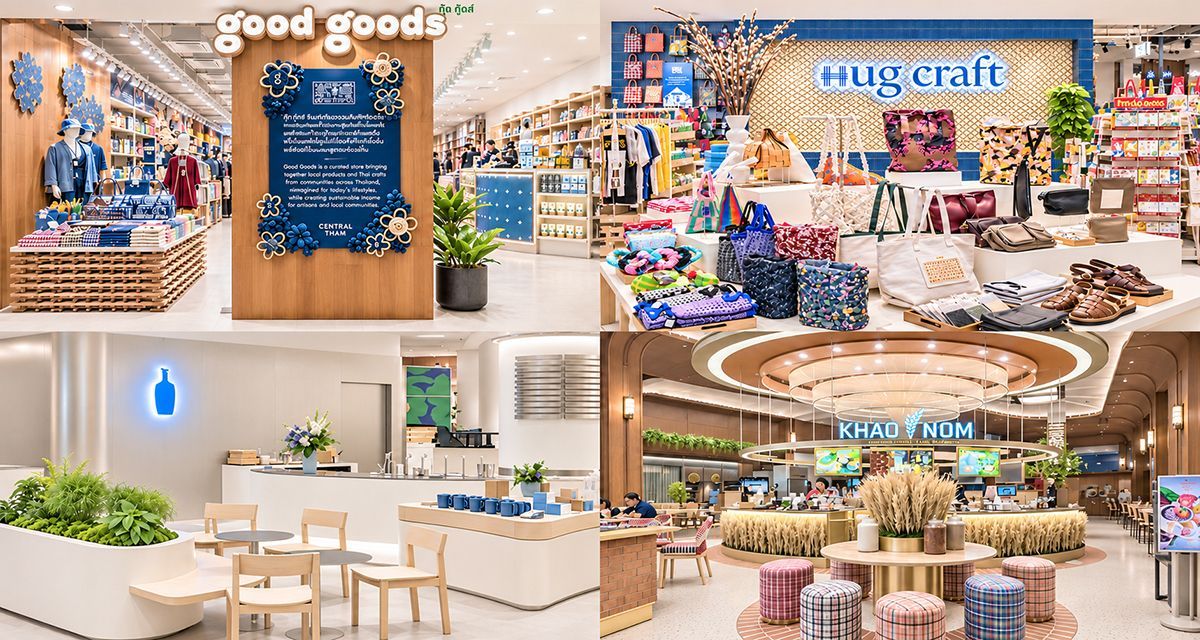
• GOOD GOODS & HUG Craft - LG Floor: Thai souvenirs and design pieces including woven bags, accessories and apparel.
• Blue Bottle Coffee - 1st Floor: specialty coffee in a minimalist café setting.
• KAO NOM - 5th Floor: Thai desserts, pastries and local sweet treats.
Afternoon: Architecture -> Escalators -> Roof Park
Slow down and explore the building itself. Look across the atrium, photograph the criss-cross escalators and notice how the interior changes as you move towards the greener upper levels. The shopping centre connects directly to the Roof Park from the 4th through 6th Floors.
Sunset: Lumphini Panorama -> Skyline Photography
Return to the Roof Park as the light changes. This is when the visual relationship between Lumphini Park and the Bangkok skyline becomes most dramatic.
Evening: Dining -> Rooftop -> Silom Nightlife
Finish with dinner or drinks before continuing into Silom. Central Park’s location means the evening can carry on without a long transfer to another part of Bangkok.
The 6th Floor includes rooftop restaurants with views across the greenery of Lumphini Park.
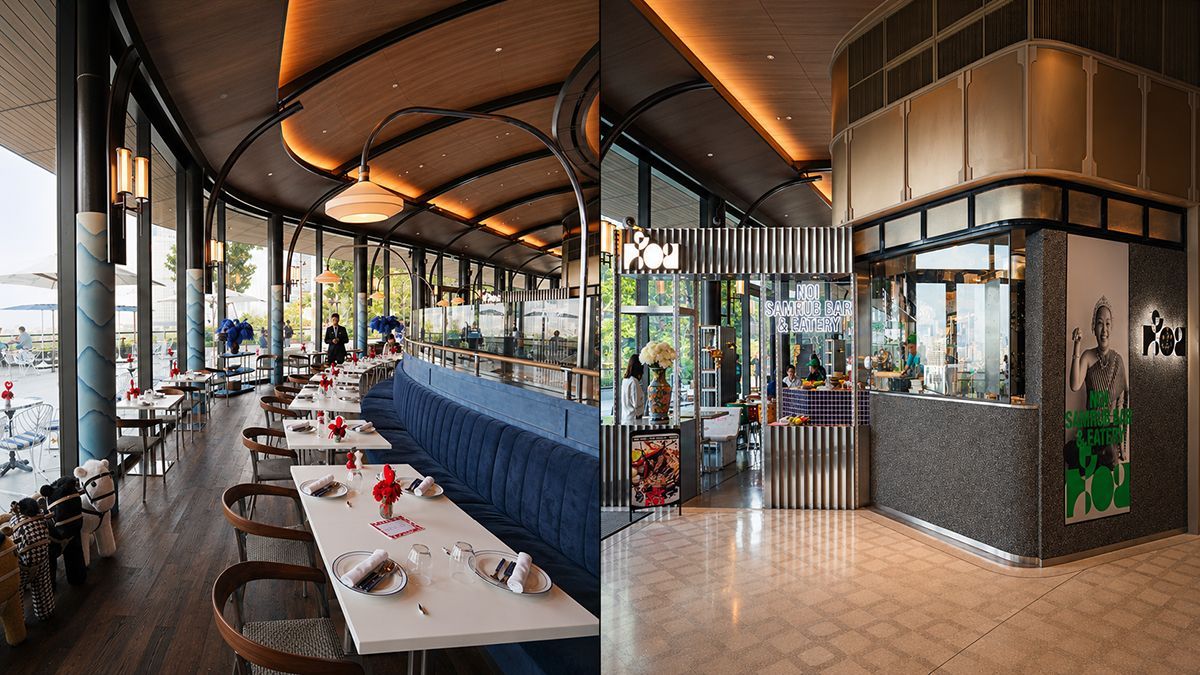
• Paname Seafood Bar - 6th Floor: a modern French seafood brasserie serving premium seafood, oysters and classic French dishes.
• NOI Samrub Bar & Eatery - 6th Floor: a modern Thai restaurant focused on regional Thai cuisine and locally sourced ingredients.
Why the Location Works for Bangkok Visitors
Central Park sits at the Silom-Rama IV intersection, next to Lumphini Park and between several of Bangkok’s most important business and visitor districts.
Silom and Sathorn are immediately accessible, while BTS Sala Daeng Station (Exit 4), MRT Silom Station (Exit 4) and Skywalk connections make it practical to reach from other parts of central Bangkok. For visitors staying nearby, the destination can be folded into an existing day rather than requiring a dedicated cross-city shopping trip.
That connectivity strengthens the first-time experience. You can begin in one of Bangkok’s best-known parks, move through architecture and retail, rise into an elevated landscape, and continue into the evening around Silom - all within one connected part of the city.
Frequently Asked Questions
Is Central Park Bangkok worth visiting?
Yes, particularly for first-time visitors who want more than shopping. Central Park combines architecture, a distinctive multi-level interior, the 7-rai Roof Park, views over Lumphini Park, dining and direct connections into Silom and Bangkok’s transport network.
What is special about Central Park Bangkok?
Its defining feature is the relationship between city and nature. The development sits beside Lumphini Park and uses architecture, interior design and the elevated Roof Park to create a gradual transition from Bangkok’s urban core to green space and skyline views.
What should first-time visitors see?
Start with the main atrium and its criss-cross escalators, explore the architecture as you move through the building, then visit the Roof Park and look back across Lumphini Park towards the Bangkok skyline.
Where are the best photo spots at Central Park Bangkok?
Three of the strongest are the eight criss-cross escalators in the main atrium, the landscaped Roof Park and the elevated view across Lumphini Park towards the city skyline.
What is the Central Park Roof Park?
The Roof Park is a 7-rai elevated green space integrated into the wider Central Park development. It includes landscaped areas, walking routes, panoramic viewpoints and spaces for community, family and leisure activities.
Can you see Lumphini Park from the Roof Park?
Yes. The elevated position gives visitors a distinctive view with Lumphini Park in the foreground and Bangkok’s skyline beyond it.
When is the best time to visit Central Park Bangkok?
Morning works well for combining Lumphini Park with the Roof Park, while late afternoon into evening is particularly good for architecture, sunset views, dining and continuing into Silom after dark.
How long should first-time visitors allow?
Allow around three to four hours for a relaxed first visit. Stay longer if you want to combine Lumphini Park, shopping, dining, photography and the Roof Park from daylight into sunset.